|
|
| |
| Förkortningen betyder |
| AS = Aspherical Optics |
| |
|
|
| |
| Förklaring från Tokina |
A standard lens is made up of a combination of spherical lens elements. Individual “lenses” within the lens are commonly referred to as “elements”. A spherical element has an even curve to the surface of the glass. However, there can be problems with such elements; light entering the center of the lens and light entering at the edge may not be perfectly focused at the same point. This is called spherical aberration. More advanced computer assisted optical designs are creating lenses with more spherical elements. More spherical elements within a lens means a greater risk of spherical aberration having a negative impact on optical quality.
Wide-angle zoom lenses and wide-angle lenses with large apertures are especially at risk for spherical aberration.
To eliminate spherical aberration, Tokina employs aspherical all-glass elements in many of its optical designs to correct this problem. The aspherical shaped surface of the lens element focuses light rays entering both the center and edge of the element correctly at the film plane for an accurately focused image. In addition to correcting spherical aberration, these elements fully correct light quantity and distortion at the edge of the image and provide excellent results when used in combination with a floating element design.
Through a close collaboration with Hoya Corporation, the world’s largest optical glass manufacturer, Tokina has succeeded in producing high quality precision molded all glass elements with a greater aspherical shape than any other lens manufacturer. This technique is unparalleled in its technological sophistication and precision. |
| |
|
|
| |
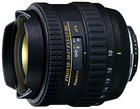
| Se exempel på berörda produkter |
|
|
| |
| Se länkar |
|
|
|
|
|
| Se objektiv för just din kamera |
| Nedan visas några modeller (se alla) |
| Canon EOS 760D |
| Canon EOS 90D |
| Nikon Df |
| Canon EOS 400D |
|
|
| Två populära objektiv du inte får missa |
|
|